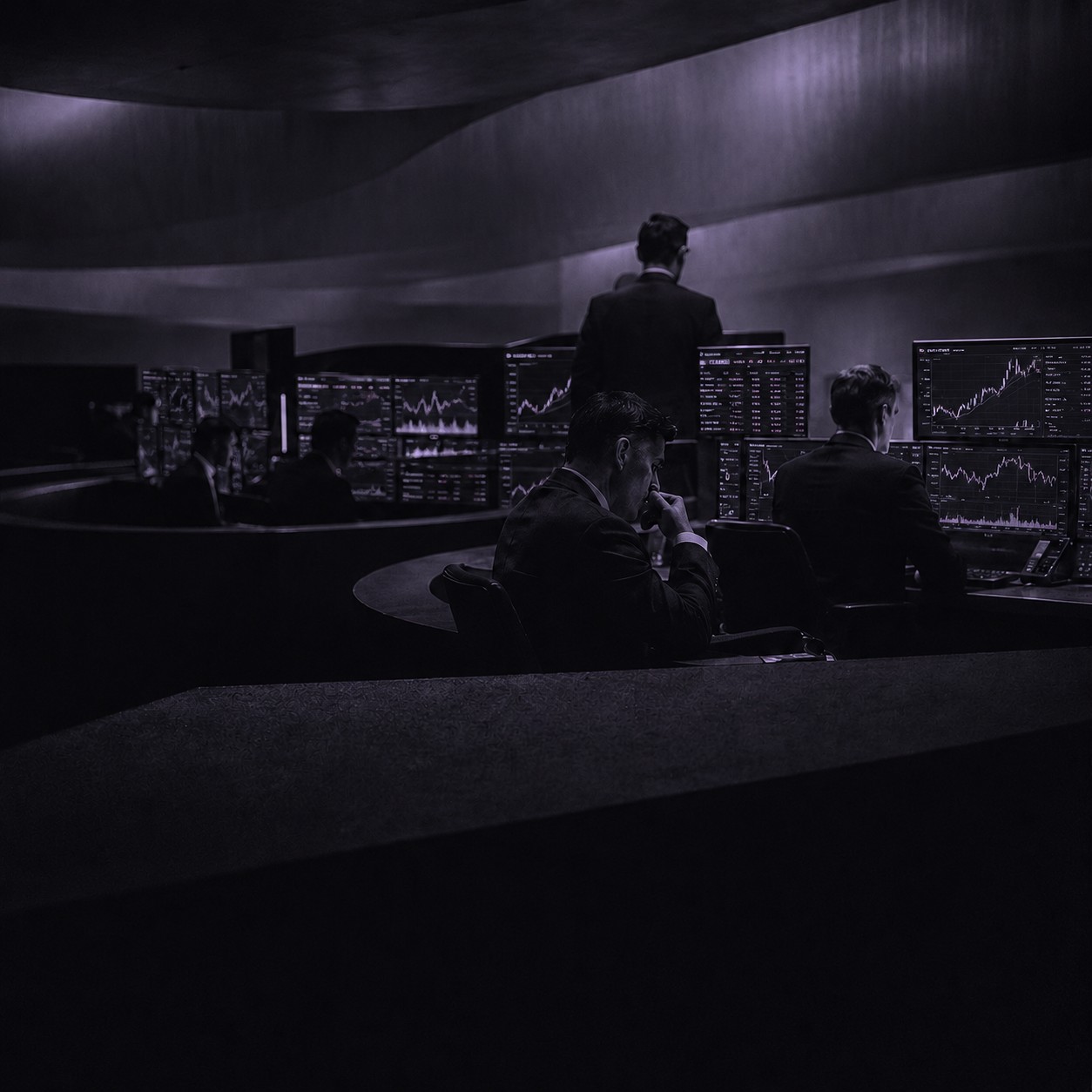
Forex signals have been around for decades. A veteran trader spots a setup, fires off an alert, and subscribers rush to copy the trade. The model worked — until it didn't. Signal providers burned out, quality dropped, and traders who relied on them had no idea why a signal was issued in the first place.
AI forex signals operate on a fundamentally different architecture. Instead of one person's gut feeling, they're generated by systems that process thousands of data points simultaneously — price action, macroeconomic releases, order flow, sentiment indicators, volatility regimes — and synthesize them into a directional bias with defined risk parameters.
But here's the problem: most traders treat AI signals exactly like they treated the old manual ones. They copy the entry, set the stop, and walk away. That approach misses most of what makes AI-generated signals valuable.
This article breaks down how modern AI forex signals are built, what separates useful ones from noise, and how to actually integrate them into a day trading strategy that compounds over time.
The Architecture Behind AI Forex Signals
Traditional signals come from a single analytical lens. A technical analyst sees a head-and-shoulders pattern on EUR/USD and sends a sell alert. A fundamentals guy reads the NFP report and sends a buy alert on USD/JPY. Both might be right. Both might be wrong. Neither one sees the full picture.
AI signal systems worth paying attention to take a multi-agent approach. Think of it as having several specialized analysts working in parallel, each covering a different dimension of the market:
Macro and fundamentals analysis examines interest rate differentials, central bank policy trajectories, GDP trends, and inflation data. This layer answers the question: what is the structural direction of this currency pair over the coming weeks?
Quantitative modeling runs statistical analysis on price data — mean reversion probabilities, momentum scores, correlation breakdowns between related pairs. This is pure math, no opinions.
Price action and technical analysis reads chart structure — support and resistance zones, trend strength, candlestick patterns, and volume profile. This layer identifies the where and when of potential entries.
Sentiment analysis gauges how the crowd is positioned. When retail traders are overwhelmingly long on a pair, it often signals a contrarian opportunity. Sentiment data from commitment-of-traders reports and retail positioning metrics feed this layer.
News monitoring tracks real-time headlines, geopolitical developments, and unexpected events that can override all other signals. A surprise rate cut or a geopolitical escalation can invalidate a technical setup in seconds.
Volatility assessment measures current and expected volatility across sessions — London, New York, Tokyo — to determine whether market conditions favor trend-following or range-bound strategies.
When these layers agree, the resulting signal carries significantly more weight than any single-dimension analysis. When they disagree, the system can flag uncertainty rather than forcing a trade — something human signal providers rarely do.
AlphaMind AI's signal generation system uses exactly this kind of multi-agent architecture. Each of its six AI agents — The Economist, The Quant, The Chartist, The Contrarian, The Watcher, and The Radar — covers one of these analytical dimensions independently before their outputs are synthesized into actionable signals.
What Makes an AI Signal Worth Following
Not all AI signals are created equal. The market is flooded with services that slap "AI" on a moving average crossover strategy and charge a monthly fee. Here's how to tell the difference.
Transparency of reasoning
A good AI signal doesn't just say "Buy GBP/USD at 1.2650." It explains why. What macro conditions support the trade? What technical levels define the risk? What's the expected holding period? Without this context, you're flying blind — you won't know when conditions have changed enough to invalidate the thesis.
MindX GPT addresses this by letting traders ask follow-up questions about any signal. Instead of a one-way alert, it's a conversation with an AI that can explain the reasoning layer by layer.
Defined risk parameters
Every signal should come with a stop-loss level and a take-profit target, both derived from the analysis rather than arbitrary round numbers. The stop should sit at a level where the trade thesis breaks down — not just 50 pips away because that's someone's default setting.
Serious AI systems calculate position sizing based on the volatility of the pair and the distance to the stop. A forex profit calculator can help you translate these parameters into actual lot sizes for your account.
Session awareness
Forex is a 24-hour market, but it doesn't behave uniformly across all hours. The London session has different liquidity and volatility characteristics than the Asian session. A signal generated for a London breakout strategy makes no sense if you're trading during Tokyo hours.
Quality AI signals factor in session-specific behavior. You can visualize this yourself using a session volatility heatmap — it shows which pairs move most during which sessions, helping you filter signals for the hours you actually trade.
Adaptive confidence scoring
Markets shift between trending and ranging regimes. An AI system that worked well during a strong USD trend may generate poor signals during a choppy, range-bound environment. Better systems assign a confidence score to each signal and reduce output when conditions are ambiguous.
This is where many traders go wrong: they want signals every day. But the best trading days are the ones where the signal says "no trade." Sitting out unclear conditions protects capital more effectively than any stop-loss.
How Most Traders Misuse AI Signals
The biggest mistake is treating AI signals as trade instructions. They're not. They're analytical outputs that should be integrated into your own decision-making framework. Here's what that looks like in practice.
Mistake 1: Blindly copying every signal
If you're entering every trade an AI system suggests without any filtering, you're essentially outsourcing your trading entirely. This creates two problems. First, you never develop your own market understanding. Second, when the system inevitably has a drawdown period, you have no framework for deciding whether to keep following it or stop.
Better approach: Use signals as a starting point. Check whether the signal aligns with your own read of the market. If you're a trend follower and the AI is suggesting a counter-trend scalp, that might not fit your style — and that's fine.
Mistake 2: Ignoring the macro context
An AI signal to go long on AUD/USD might look technically perfect, but if the Reserve Bank of Australia just signaled a dovish pivot, that macro headwind could overpower any short-term bullish pattern. The best traders use AI signals in combination with an economic calendar to avoid trading into major event risk.
Mistake 3: Using signals without a portfolio view
Taking signals in isolation can lead to correlated risk. If your AI system generates buy signals for EUR/USD, GBP/USD, and AUD/USD on the same day, you're effectively tripling down on a single bet: short USD. A portfolio view helps you see aggregate exposure and avoid accidentally concentrating risk.
Mistake 4: Not tracking signal performance
If you don't keep records, you can't improve. Log every signal you act on, the outcome, and whether you modified the parameters. Over time, patterns emerge — maybe the system performs best on GBP pairs during London session, or maybe its gold signals are weaker during low-volatility weeks. These insights let you filter signals more intelligently.
Building a Day Trading Strategy Around AI Signals
Here's a practical framework for integrating AI forex signals into a day trading routine.
Pre-session preparation (15-20 minutes)
Before the session you trade opens, check three things:
Economic calendar. Are there high-impact events scheduled during your trading window? If a central bank rate decision drops at 2 PM and you trade the London-New York overlap, you probably want to be flat by 1:45 PM.
AI signal dashboard. Review the signals generated for your preferred pairs. Note the direction, entry zone, stop, and target. Read the reasoning.
Session volatility context. Check which pairs are expected to see elevated volatility during your session. Signals on low-volatility pairs during their quiet hours are less likely to reach target within a day trading timeframe.
During the session
Wait for confirmation. Don't rush to enter at the exact signal price. Wait for price action to confirm the direction — a break of a key level, a pullback to the signal's entry zone, or a shift in short-term momentum. Patience reduces the number of fakeout entries.
Manage risk mechanically. Once in a trade, use the stop-loss from the signal. Don't widen it because you "feel" the trade will work out. Don't move it to breakeven too early because you're nervous. Let the trade either hit target or stop out according to the plan.
One to three trades maximum. Day trading isn't about volume. On most days, one well-executed trade is enough. Two is fine. Three is the upper limit. If you're taking more than that, you're probably forcing setups that aren't there.
Post-session review (10 minutes)
Log your trades. Note what the AI signal said, what you actually did, and the result. Over weeks, this journal becomes your most valuable educational resource — more useful than any course or book.
The Compounding Edge
The real value of AI forex signals isn't any single trade. It's the compounding effect of consistently making slightly better decisions. A signal system that gives you a 55% win rate with a 1.5:1 reward-to-risk ratio doesn't sound dramatic. But run that over 200 trades and the equity curve looks very different from a coin flip.
AI doesn't eliminate losses. It doesn't predict the future. What it does is process more information than any human can, identify patterns across multiple analytical dimensions simultaneously, and present them in a structured format that removes some of the emotional noise from trading decisions.
The traders who get the most from AI signals aren't the ones who follow them blindly. They're the ones who use them as one input in a disciplined, repeatable process — and who have the patience to let the edge play out over time.
For a deeper look at how AI-driven market analysis works across different asset classes and timeframes, explore AlphaMind's short-term prediction tools and see how multi-agent analysis translates into real-time trading intelligence.
Disclaimer
This article is for educational and informational purposes only and does not constitute financial or investment advice. Trading forex, commodities, futures, and cryptocurrencies involves significant risk of loss. Past performance is not indicative of future results. Always conduct your own research and consult with a qualified financial advisor before making any trading decisions.